
Back pain treatment · Melbourne
Back pain does not have to mean protecting your back forever
Most back pain is not a sign of damage, and it is not something you have to guard for life. We work out what is driving yours and help you get moving again.
 Meet the Alpha teamCare matched to your goals
What is probably going on
Most back pain is not a sign of damage
Most back pain is what clinicians call non-specific. It comes from the joints, discs, muscles and nerves of the back working together, and no single structure can be pinpointed as the cause. That is normal. It is not a failure of diagnosis, and it does not mean nobody knows what to do. Healthdirect notes that the large majority of back pain is not caused by a serious medical problem.
If you have had a scan, the report may have used words like disc bulge, degeneration or arthritis. Those findings are common in people who have no back pain at all, and they become more common with age, a bit like grey hair. On their own, they do not tell us how much pain you should have or what your back can do.
That does not mean your pain is imagined. Your pain is real, and it is physical. The scan is one piece of the picture, and it is worth discussing with the doctor who ordered it alongside what we find when we assess you.
Backs are strong and built to take load. For most people, bending and lifting are not dangerous, even when the back is sore. Protecting a back for months—bracing, avoiding bending, stopping activity—tends to leave it stiffer and more sensitive rather than safer.
So why can it hurt so much? After an episode of pain, the nervous system can become more protective, so movements that were fine before start to register as a threat. Muscles around the spine tighten to guard it. Worry about causing damage leads to moving less and more cautiously. And sometimes the load simply outstrips what the back currently tolerates, after a busy week, a heavy lift or a change in routine. Each of these is real, and each can be worked on.
Read the NICE guideline on low back painWhy it keeps coming back
Rest, settle, repeat
For many people it goes like this: the back goes, you rest, it settles, you return to exactly what you were doing, and a few months later it goes again. Each episode gets managed. Nobody stops to ask what the back was being asked to do, and why it stopped coping.
The contributors are usually ordinary: long days sitting, a job with repeated bending or lifting, a training program with no back strength work, poor sleep, stress, a break from training, a new baby or a house move. None of them is a diagnosis, but together they explain a lot.
Fear plays a part too. After a few episodes it makes sense to move less and brace more, but that tends to make backs more sensitive, not less. The goal is not a back that never hurts. It is a back that tolerates your life, and a plan that aims to reduce the chance of it recurring.
What we will not do. We will not tell you your back is fragile. We will not put you on an open-ended schedule of maintenance visits without a reason you agree with. And we will not send you for a scan you do not need. If we think imaging is warranted, we will explain why and help you arrange it with your GP.
Explore exercise physiology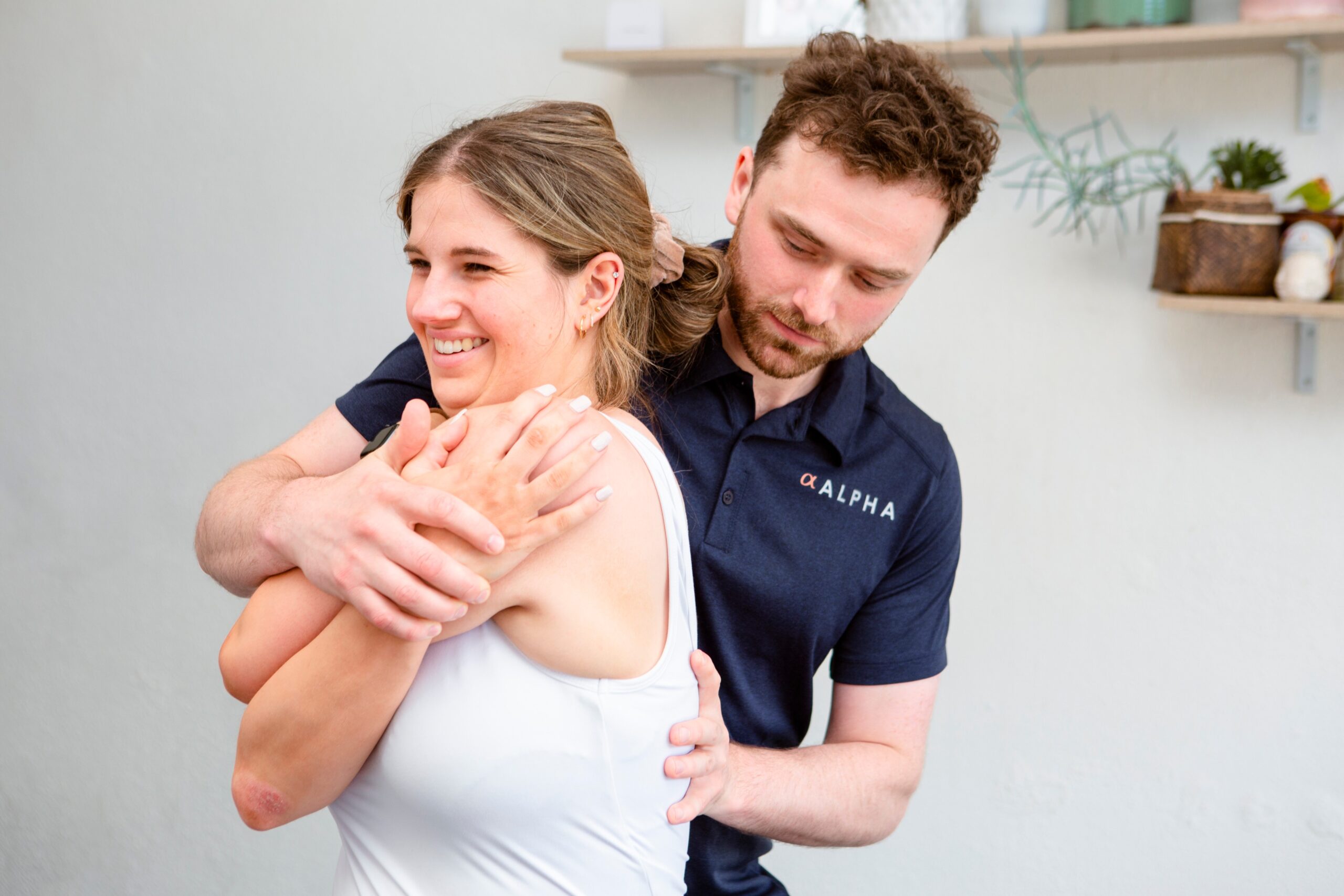
How we treat back pain
Explain it clearly, then build strength
- 01
Start with your story
What you do, what changed, what you have been told and what you have stopped doing because of your back.
- 02
Assess more than the sore spot
We look at your back, your hips and how you move and load, not just the painful segment.
- 03
Explain what is going on
You leave with a plain-language explanation you could repeat to someone else.
- 04
Settle pain and guarding
Hands-on care may help ease pain and muscle guarding so you can move, and manipulation is only used if you are comfortable with it.
- 05
Return to movement
Movement and loading are graded back in around your work, training and home life, and re-tested every session.
- 06
Build strength for the long term
Strength work aims to reduce the chance of the pain recurring, and it is the phase many people never reach.
Sciatica and leg pain
When back pain travels into the leg
Sciatica describes nerve-related pain that travels from the lower back into the buttock and leg. It often comes with pins and needles, numbness or a burning feeling, and it can be more distressing than the back pain itself.
An irritated disc can be one cause, but it is not the only one. Nerves can also become sensitive where the space around them narrows or after a period of higher load, and often no single cause is found. The reassuring news is that most nerve-related leg pain settles over weeks to months, and surgery is the exception rather than the rule. Healthdirect’s sciatica guidance explains more.
Surgery can be the right choice for some people, particularly when symptoms are severe and have not improved with other care. That decision belongs with you and your doctor or surgeon, and we will support you in getting that opinion if it is needed. Leg weakness that is getting worse, spreading numbness or any of the urgent symptoms above should be assessed promptly.
Who you may see
Osteo, physio or chiro? We will help match you
Osteopathy
Hands-on treatment and movement-based rehabilitation, with a clear explanation of what is driving your pain.
Physiotherapy
Assessment, hands-on care and progressive exercise to rebuild movement and strength.
Chiropractic
Hands-on care, including manipulation only with your consent, alongside a movement plan.
Clinical Pilates
Supervised sessions to build control and strength as your pain settles.
Exercise physiology
Structured strength work for the long-term phase of your recovery.
Related support
Explore connected concerns
Back pain treatment in Melbourne
See the team close to home
Common questions
Back pain FAQs
Should I get a scan for back pain?
Usually not straight away. Most back pain can be assessed without imaging, and scans often show changes such as disc bulges that are common in people without pain. Imaging is more useful when urgent symptoms are present, when nerve symptoms are getting worse, or when the result would change your care. If your GP or specialist has recommended a scan, follow that advice and bring the report to your appointment.
Should I rest or keep moving?
For most back pain, staying gently active is recommended over bed rest. Keep doing what you can, adjust what aggravates it and build back up as it settles. If you cannot move because of the pain or you have any urgent symptoms, seek medical care first.
Is my disc bulge causing my pain?
It may be part of the picture, but a disc bulge on a scan does not automatically explain your pain. Bulges are common in people with no symptoms and become more common with age. Your pain is real either way. We look at how your back behaves, not just what the image shows.
Do I need a referral?
No. You can book directly. If you have private health cover with extras, you may be able to claim a rebate depending on your policy.
Should I see an osteo, physio or chiro for back pain?
All three commonly treat back pain, and there is considerable overlap in how they work. How a practitioner explains your pain and builds your plan often matters more than their title. If you are unsure, tell us what is going on and we will help match you.
How many sessions will I need?
It depends on how long you have had the pain, what is driving it and what you want to get back to. We will give you an estimate after your first assessment and review it as you go. The aim is for you to manage your back independently, not to rely on ongoing appointments.
Is cracking my own back bad?
Occasional self-cracking is generally considered harmless. The pop is thought to be gas releasing within the joint, not bones moving back into place. If you feel the urge constantly, it is often a sign your back wants more movement, and regular, varied exercise may help more than chasing the click.
What is the best exercise for lower back pain?
There is no single best exercise. Clinical guidelines support exercise for back pain, and the most useful type is usually one you enjoy and will keep doing, progressed over time. Walking, strength training, Pilates and swimming can all have a place. We tailor the choice to your back, your goals and your routine.
Your next step
What have you stopped doing because of your back?
Tell us what you want to get back to. We will assess your back, explain what we think is going on and build the next step with you.